Pattern Crypto’s Top 5
The strongest cases for long-term relevance.
- The idea
- Five different economic roles form a focused research shortlist.
- Main risk
- A compelling project can still be overpriced, and the ranking can change.
- What to watch
- Evidence that strengthens—or breaks—each asset’s stated thesis.
James Clayton began sharing top-10 crypto lists in 2013. This edition returns to that idea with a tighter selection: five assets, five distinct reasons to pay attention, and clear conditions that could change our minds.
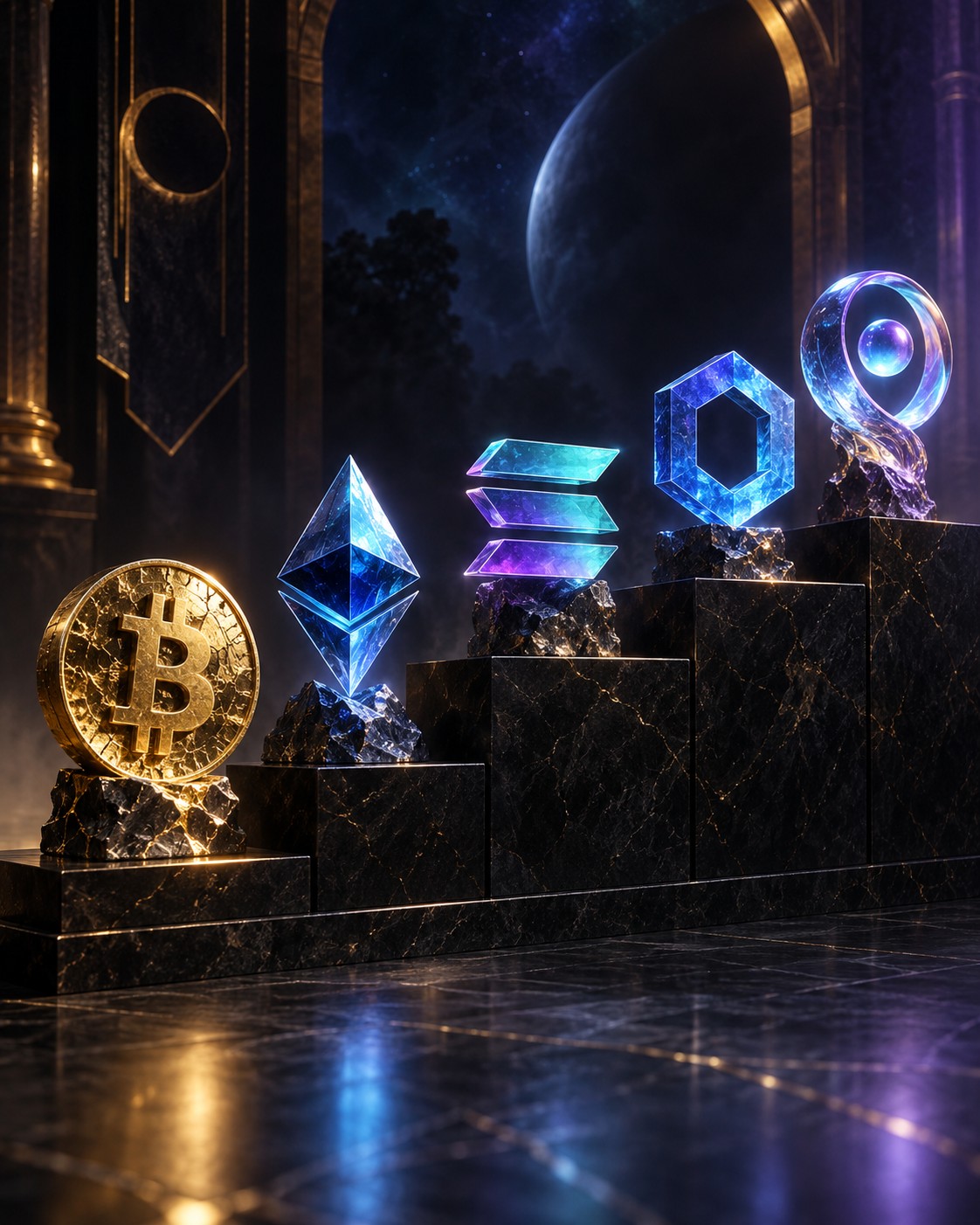
How we choose
We weigh economic purpose, durability, adoption evidence, and the connection between network success and token demand. The order reflects editorial judgment, not a numerical scoring model. BTC and ETH anchor the list; SOL, LINK, and AAVE add different application and infrastructure theses. All five remain exposed to crypto-wide risks.
Bitcoin
Independent digital money
Bitcoin earns first place because its central proposition is relatively clear: a monetary asset with verifiable supply rules and no central issuer. It does not need to win every application category. It needs people to keep valuing those monetary properties across changing economic conditions.
The main reservation
Scarcity cannot force buyers to appear. A durable network can still be an expensive investment at the wrong entry price.
What would get it removed?
A sustained deterioration in security or credible monetary demand would challenge its place. A price decline by itself would not establish either.
Read the full BTC thesis ↗Background: Bitcoin.org — Frequently Asked Questions; Bitcoin whitepaper.
Ethereum
Programmable financial infrastructure
Ethereum earns second place for the breadth of its programmable infrastructure and ETH’s role in fees and staking. The attractive scenario is recurring economic activity that needs shared settlement and security, rather than a succession of temporary speculative applications.
The main reservation
Applications and scaling networks can grow while base-layer economics capture less value than investors expect.
What would get it removed?
We would reconsider if useful ecosystem activity expanded while ETH became persistently less important to its economics.
Read the full ETH thesis ↗Background: Ethereum.org — Ether; ETH supply mechanics; Ethereum whitepaper.
Solana
Applications people return to
Solana earns third place for its application-focused opportunity: making blockchain services inexpensive and responsive enough for repeat use. SOL participates through transaction fees and network security. Our conviction depends on lasting demand for those functions, not simply a high activity counter.
The main reservation
Low fees require substantial economic activity, and incentive-driven usage can vanish. Issuance and reliability also matter.
What would get it removed?
Repeated failures to retain useful activity through quieter markets, or a lasting breakdown in reliability, would weaken its claim.
Read the full SOL thesis ↗Background: Solana — Transaction fees; staking and inflation documentation.
Chainlink
Infrastructure across networks
Chainlink earns fourth place because external data and connectivity can be useful across many applications and chains. Supported fee conversion into LINK provides a specific economic mechanism to examine alongside its infrastructure role. We prefer a thesis tied to paying customers over one based solely on integration announcements.
The main reservation
Not every partnership generates substantial revenue, and not every dollar of associated activity becomes LINK demand.
What would get it removed?
We would reconsider if recurring paid usage and meaningful token demand consistently failed to follow the adoption narrative.
Read the full LINK thesis ↗Background: Chainlink — Economics; Payment Abstraction; Chainlink Reserve.
Aave
A financial service with a clear customer
Aave earns fifth place because lending and borrowing solve an identifiable financial need. The protocol lets suppliers provide liquidity and borrowers obtain loans against collateral. This offers a different thesis from adding another general-purpose blockchain to the list.
Aave’s token documentation describes revenue-funded purchases of AAVE for the DAO’s ecosystem reserve. That gives token economics a concrete mechanism to assess, but the program is governed, can change, and does not guarantee a dividend or price appreciation. Tokens acquired for a reserve are not the same as tokens permanently burned.
The main reservation
Smart-contract failures, collateral shocks, bad debt, and governance decisions can undermine the protocol. AAVE is a governance token, not an ownership share in borrowers’ interest payments.
What would get it removed?
A serious deterioration in risk management, durable lending demand, or the economic case for holding AAVE would put its place under review.
Review our fundamentals framework ↗Background: Aave documentation — Protocol Overview; AAVE Token. Reviewed September 19, 2026.
- AAVE is a governance token.
- The documented buyback program sends acquired tokens to the ecosystem reserve rather than burning them.
Source: Aave documentation — AAVE Token. These mechanisms do not entitle holders to a dividend.
A shortlist that can change
This is the September 19, 2026 edition, not a live ranking. Future revisions should explain additions, removals, and changes in order. An asset can remain interesting while falling off the list, and a good thesis can become an unattractive purchase at an excessive valuation.
Prepared with AI assistance under James Clayton’s editorial direction. The editor holds some assets discussed, which can create bias. Educational commentary, not individualized financial advice. Substantial or total losses are possible. Project documentation supports the mechanisms described; the rankings and removal criteria are Pattern Crypto analysis.
Edition history
September 19, 2026 — First edition: BTC, ETH, SOL, LINK, AAVE. No ranking changes have been made. Future editions will record changes and their reasons here.